
Meego - Video Call, Live Chat
Meego TeamSocial
3.660.00 Reviews
- Version
- 2.6.7
- Installs
- 10.00M
- Age Rating
- Mature 17+
Screenshots

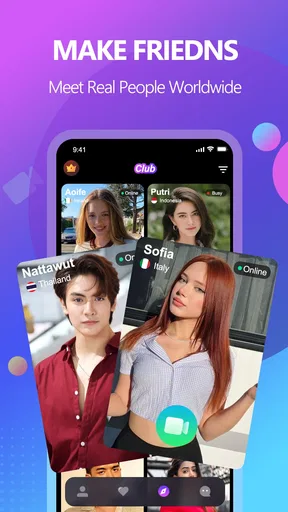

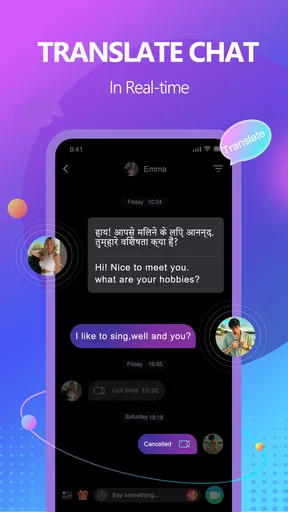
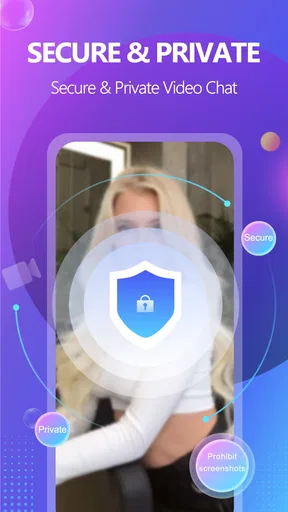
Our Review of Meego - Video Call, Live Chat
 Analysis by Appyee
I approached Meego - Video Call, Live Chat as a social app built around one clear idea: meeting people through live video instead of relying only on text. That focus changes the feeling of online conversation. A message can sit unanswered or be carefully edited, while a live call creates an immediate sense of presence. In my experience, that makes the app more appealing when I want a spontaneous interaction rather than another conventional messaging thread.
Meego is developed by Meego Team and is available free of charge, with optional in-app purchases ranging from $0.99 to $99.99 per item. It belongs to the social category, carries a Mature 17+ age rating, and supports devices running Android 7.0 or later. The current version is 2.6.7. Those details matter because this is not an app I would hand to a child, and the live format calls for the same caution I would use with any service that connects me with unfamiliar people.
The app has reached over 10 million installs, while its average score sits at 3.6 from around 14 thousand ratings. I read that combination as a sign of broad curiosity rather than universal satisfaction: plenty of people are willing to try the format, but the experience will depend heavily on who is available, how comfortable I am with live calls, and how carefully I manage conversations.
Live video is the feature that changes the whole experience
I’d use the next section to focus on how a live call depends on more than simply opening the app: both people need a workable connection, and even small interruptions can change the rhythm of a conversation. I find it helps to choose a moment when I can give the exchange my attention, which leads naturally to the question of where this kind of social app fits into everyday mobile use.
Why an immediate call feels different from ordinary social apps
The main capability is live video chat, and it is more important here than any surrounding social element. In a typical messaging app, I can spend time building context before deciding whether someone is worth talking to. Meego puts more weight on the first interaction. Seeing and hearing another person can make a conversation feel warmer, but it also removes much of the distance and control that text provides.
That trade-off is the reason I would choose this app for a particular kind of social moment. If I am bored with silent scrolling or repetitive profile browsing, a live conversation can feel more engaging. I do not need to compose a perfect opening line, and I can judge the mood of a conversation more naturally through tone and facial expression.
At the same time, live video is not automatically better. It asks for attention, a reasonable connection, and a willingness to be visible. Someone who prefers thoughtful messages, private group chats, or carefully managed introductions may find the central format too intense. The app’s strongest feature is therefore also its clearest boundary.
What I would prepare before starting
I would not open Meego for the first time while sitting in a noisy public place or when I only have a few seconds available. A live conversation works better when I can hear clearly, keep the camera positioned comfortably, and leave if the interaction becomes unpleasant. That sounds basic, but it makes a noticeable difference to whether the experience feels social or stressful.
I also recommend deciding in advance what personal information I am not willing to share. A live call can encourage quick familiarity, especially when the other person seems friendly. I would keep the first exchanges general and avoid treating a pleasant conversation as proof that the person is trustworthy. The visual format creates a stronger impression of closeness than a short interaction necessarily deserves.
For privacy-conscious users, the practical rule is simple: show only what I am comfortable showing, and end a conversation as soon as it crosses a boundary. The value of a live social app depends partly on user judgment, not just on its interface. That is especially important with a Mature 17+ service designed for direct interaction between strangers.
How I would use it in a normal day
Imagine finishing work or classes and wanting a short break that feels more human than watching another stream. I could open the app, look for a live conversation, and spend a few minutes talking with someone outside my usual circle. If the exchange is awkward, I can move on; if it is enjoyable, I have had a genuine social interruption in an otherwise routine day.
The important point is that I would treat Meego as an activity, not as an always-on replacement for every other social tool. I would use it when I specifically want live contact. For arranging plans with people I already know, a familiar messenger would be faster. For long conversations that need links, photos, searchable history, or group coordination, a conventional messaging service remains more practical.
This distinction helps set expectations. Meego’s appeal is the immediacy of meeting and speaking, not the organization of a personal communication archive. I would open it for discovery and conversation, then move established relationships to another service if we needed more structured communication.
The less obvious advantage: live interaction reveals compatibility quickly
One benefit that a short store summary cannot explain is how quickly video can filter out mismatched conversations. In text, I might continue replying because the other person’s messages look interesting. During a live call, I can notice whether the pace, humor, and willingness to listen suit me. That can save time when my goal is meaningful conversation rather than collecting contacts.
There is a caution attached to that advantage. A quick impression is useful, but it is not a complete judgment of character. Someone may be nervous on camera, distracted, or simply having a bad day. I would use the first call to decide whether I want another conversation, not to make sweeping assumptions about the person.
Small habits that make the format work better
I found that the best approach is to keep the first interaction light and short. Asking broad questions about interests or daily routines gives the other person room to participate without pushing for personal details. If the conversation becomes one-sided, repetitive, or uncomfortable, there is little benefit in forcing it to continue just because the call has started.
Another useful habit is to avoid multitasking. Looking away repeatedly or trying to do chores during a live exchange makes the conversation feel careless. If I only have time to glance at the app, I would rather wait until I can give the call proper attention. This is one of the trade-offs of video compared with text: it is more expressive, but less forgiving of divided attention.
I would also keep expectations realistic about the people I meet. A social discovery app can produce an enjoyable conversation, but it cannot guarantee that every interaction will be interesting, respectful, or compatible. The most satisfying use comes from treating each call as a small chance to connect, not as a promise of friendship.
Where Meego fits beside familiar alternatives
Compared with ordinary messaging apps, Meego puts less emphasis on composing, saving, and organizing conversations. That makes it feel more spontaneous, but also less suitable for practical communication. If I need to send an address, plan a group event, or return to an old message, a standard messenger is usually the better tool.
Compared with social networks built around posts and feeds, Meego narrows the distance between discovery and conversation. I am not mainly reacting to published content; I am moving toward a direct exchange. That can feel more personal, although it also means the quality of the experience depends more strongly on the available conversations at the moment I open the app.
Compared with established video calling tools, its appeal is not necessarily calling people I already know. I would choose a familiar video service for family, colleagues, or planned appointments. Meego makes more sense when I want to meet someone new and the uncertainty of that interaction is part of the appeal.
The best scenario is a short, open-ended social break
The strongest use case for me is a person who wants live contact without arranging a call in advance. Perhaps I have moved to a new city, work from home, or simply want to speak with people beyond my normal routine. In that situation, the app’s video-first approach can provide a more immediate sense of connection than browsing posts alone.
It may also suit users who struggle with starting conversations through text. Speaking naturally can be easier than inventing a clever written introduction. A simple question can lead somewhere, and the other person’s response gives me more material to work with than a blank chat window.
I would not recommend it as the first choice for someone seeking a tightly controlled dating process, professional networking, or a private family communication channel. Those goals benefit from clearer identity, planned contact, or stronger organization. Meego is better for casual social discovery, provided I am comfortable with uncertainty and live interaction.
The real trade-off: immediacy versus control
The most important limitation is the loss of control that comes with real-time video. Text lets me pause, edit, and decide exactly how much to reveal. A live call moves at the other person’s pace. That can create natural conversation, but it can also make an uncomfortable moment feel harder to manage.
Connection quality is another practical concern for any video-based experience. I would expect interruptions, unclear audio, or an awkward start to have a greater effect here than they would in a text app. Even when the service itself is functioning, two people may have different network conditions, lighting, microphones, or comfort levels on camera. The format is inherently more demanding than exchanging messages.
There is also a financial boundary to keep in mind. The app is free to download and use at its basic level, but optional purchases can cost from $0.99 to $99.99 per item. I would not spend anything until I understood exactly what an optional purchase changes for my experience. A live conversation should be enjoyable without creating pressure to pay, and I would set a personal limit before exploring any paid elements.
The rating of 3.6 is consistent with my cautious view: the concept is attractive, but a social platform cannot control every interaction. A good session may be followed by a disappointing one simply because the available conversations differ. I would judge it over several ordinary uses rather than expecting the first launch to define the entire service.
Who should approach it carefully
I would be particularly careful if I were underage, uncomfortable appearing on camera, or easily pressured into sharing personal details. The Mature 17+ label is a clear signal that this is intended for an older audience. Parents should not treat the app as a harmless children’s chat space, and younger users should look for services designed specifically with their age group in mind.
I would also skip Meego if I need reliable, scheduled communication. It is not the tool I would choose for an interview, a work meeting, or an important conversation where missed timing would cause problems. The discovery-oriented nature of live social chat is better suited to optional, low-stakes interactions.
People with limited data, weak connectivity, or little privacy at home may find the video requirement inconvenient as well. A text-first service will generally be easier to use discreetly and with less technical friction. That does not make Meego poor; it simply means the central feature has real practical requirements.
Who gains the most from the experience
The best match is someone who values spontaneity, enjoys meeting unfamiliar people, and understands that not every call will become a lasting connection. I think curious adults and older teenagers who want a more immediate alternative to feed browsing can get the most from it. The app gives them a reason to participate rather than passively consume content.
It is also useful for someone who wants to test social compatibility early. A brief video exchange can reveal whether conversation feels balanced before I invest time in a longer online relationship. I would still move slowly, but the format can provide an efficient first impression when used responsibly.
On the other hand, I would direct privacy-focused users, people seeking professional communication, and anyone who dislikes unpredictable social contact toward a different category of app. A planned video tool or a trusted messenger may offer a calmer and more dependable experience. Meego’s value comes from openness and immediacy, so those who want control above all else are unlikely to enjoy its design.
My recommendation after weighing the experience
I see Meego as a focused social app rather than a universal communication platform. Its live video capability can make meeting people feel immediate and surprisingly natural, especially when I am tired of typing and want a real exchange. The best moments come when I enter with modest expectations, protect my privacy, and give the conversation enough attention to develop.
The same feature can also create pressure, inconsistency, and awkwardness. I would not install it expecting every interaction to be rewarding, and I would not pay for optional items without first deciding whether they genuinely improve my use. The free starting point makes experimentation reasonable, while the Mature 17+ rating and live format call for sensible boundaries.
My final view is positive but selective: Meego - Video Call, Live Chat is worth trying if spontaneous video conversation is exactly what I want. It is less convincing as a replacement for messaging, planned calls, or carefully moderated social spaces. For the right user, though, its direct approach can turn a quiet few minutes into a real conversation—and that is the specific strength I would recommend to a friend.
Verdict
Strengths of Meego - Video Call, Live Chat
- Simple interface makes starting video calls quick for new users.
- Live chat features support casual conversations beyond one-to-one calls.
- Useful for meeting people outside your existing social circle.
- Video interactions feel more personal than standard text messaging.
- Easy to browse available social features from a mobile device.
Limitations of Meego - Video Call, Live Chat
- Some features may require in-app purchases or paid virtual items.
- Public interactions can include unwanted messages or unsuitable behavior.
- Call quality depends heavily on your internet connection and device.
- Users should review privacy settings before sharing personal information.
- The experience may feel repetitive if you prefer structured social activities.
Similar Picks in This Category
View All
Meta Platforms, Inc.4.6

Instagram4.0

Likee-Live, Chat & Party Games
Likeme Pte. Ltd.4.4

Facebook Lite
Meta Platforms, Inc.4.5

TikTok - Videos, Shop & LIVE
TikTok Pte. Ltd.4.0

Moj: Free Short Drama & Reels
ShareChat4.1
Frequently Asked Questions
What is Meego - Video Call, Live Chat?
Meego - Video Call, Live Chat is a social communication app designed for meeting people through live video calls, chat, and interactive conversations. After exploring the app, its main focus appears to be real-time social discovery rather than traditional messaging alone. Users can create a profile, browse available people, start conversations, and potentially make video connections with users from different locations and backgrounds.
Is Meego - Video Call, Live Chat free to use?
The app can generally be downloaded and used without an upfront purchase, but some features may be limited or connected to in-app purchases. Video calls, virtual gifts, premium interactions, or extended communication options may require credits or a subscription, depending on the current version and region. Before spending money, users should carefully review the pricing, renewal terms, and purchase conditions shown inside the app.
Is Meego safe and suitable for everyone?
Meego is intended for social interaction and may include conversations with people users do not know personally. For that reason, it should be used responsibly, especially when sharing personal information, photos, location details, or social media accounts. Users should take advantage of blocking and reporting tools, avoid sending money to strangers, and remember that online profiles may not always represent a person accurately.
Does Meego require a strong internet connection for video calls?
Yes. Since Meego focuses on live video communication, a stable internet connection is important for acceptable call quality. Wi-Fi or a reliable 4G or 5G connection will usually provide a smoother experience than a weak mobile signal. Poor connectivity can cause delays, frozen video, dropped calls, or reduced image quality. The app may also consume a noticeable amount of mobile data during extended video sessions.
What permissions and device features does Meego use?
To provide video calling and live chat functions, Meego may request access to the device camera and microphone. Depending on the features you use, it may also request notifications, photos, contacts, or other permissions. You can manage these settings through Android or iOS privacy controls, and it is sensible to grant only the permissions required for the features you actually plan to use. Check the app’s privacy policy before creating an account.
